
Sesamoiditis in Liverpool: Symptoms, Causes and Care Choices

The sesamoids are two small bones beneath the big toe that help its tendons work; sesamoiditis is inflammation around these bones and nearby soft tissues. It often causes a gradual ache under the big toe joint, especially when pressure is placed on the ball of the foot or the toe bends upwards. For people seeking sesamoiditis treatment in Liverpool, the right care starts with understanding what is causing the pain, since irritation and a fracture can feel similar but need different assessment.
Pain in this part of the foot can make walking and exercise uncomfortable, and it’s reasonable to want a clear explanation before deciding what to do next. This article explains what sesamoids do, how sesamoiditis may feel and what can contribute to it. It also explores how tailored care, including pressure-relieving orthotics and injections in selected cases, may help manage symptoms and support a return to comfortable movement.
Table of Contents
Sesamoiditis symptoms
Sesamoid pain is usually felt beneath the big toe joint, at the ball of the foot. Two small sesamoid bones sit under the first metatarsal, embedded in tendons that help control toe movement. With sesamoiditis, inflammation around the bones and nearby soft tissues can make each step painful. Discomfort may stay local or worsen when the big toe bends upwards, such as during push-off while walking.
Symptoms often develop gradually as a dull, persistent ache. Running, dancing or repeated forefoot loading can make the area more sensitive, while rest may ease symptoms. Sudden pain and swelling after direct trauma can indicate an acute fracture. A stress fracture may instead develop through repetitive loading, causing pain beneath the toe joint that worsens during exercise.
Sesamoiditis and a fracture can feel similar, so pain alone can’t reliably distinguish them. A bipartite sesamoid forms naturally in two pieces and may be mistaken for a fracture on an X-ray. A podiatrist assesses the pain location, how it began, tenderness and toe movement. X-rays, sometimes with a special view of the sesamoids, may help; MRI or CT can show a stress fracture and other bone or joint changes.
Other conditions can also cause big toe pain. General swelling and pain on top of the toe joint, for example, may point towards osteoarthritis, synovitis or gout rather than sesamoiditis. An examination helps distinguish these possibilities and determine whether imaging or referral is appropriate.
Arrange an assessment with a doctor or podiatrist if pain beneath the big toe persists despite rest for a week or two. Seek prompt assessment after direct trauma causing sudden pain and swelling, as a fracture may need to be ruled out.
During a flare-up, a podiatrist can review which activities provoke pain and guide adjustments to reduce pressure while symptoms settle. They can assess whether toe movement or particular exercises aggravate the area, then adapt the plan as symptoms change. Moderate to severe sesamoiditis may take several months to resolve fully, so progress is assessed over time, not by one painful day.
Private health insurance benefits for podiatry or orthotics depend on your policy and extras cover. The applicable benefit and any limits are determined by your cover, so there isn’t one amount that applies to everyone.
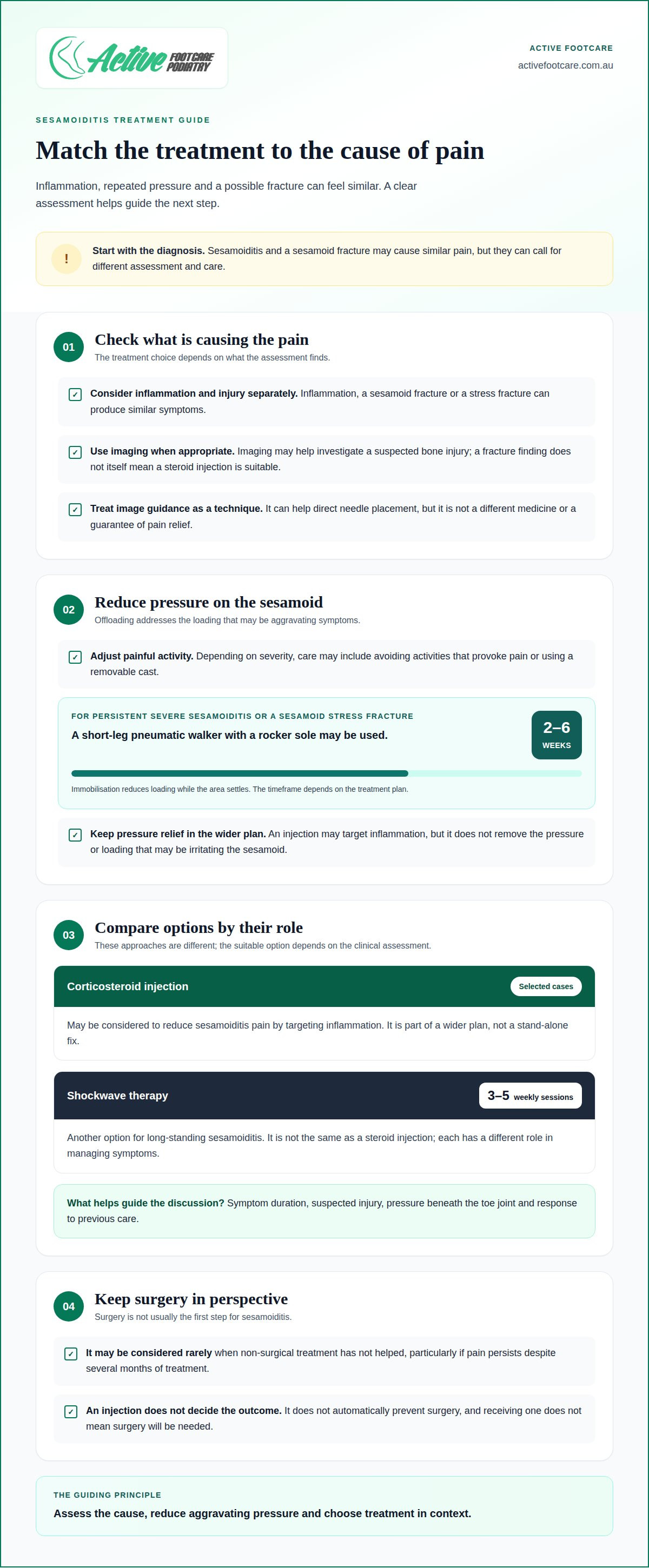
Steroid injections
A corticosteroid injection may sometimes be used to reduce sesamoiditis pain. It targets inflammation but doesn’t remove the pressure or loading that may be irritating the sesamoid. For that reason, an injection is considered alongside the wider treatment plan, not as a stand-alone fix. Assessment also needs to distinguish inflammation from a sesamoid fracture or stress fracture, since similar pain can have different causes.
Some injection discussions include image guidance, where imaging helps direct needle placement. This describes a technique, not a different medicine or a guarantee of pain relief. Its suitability depends on the clinical assessment and the problem being treated. Imaging may also help investigate a suspected bone injury, but finding a fracture does not itself mean a steroid injection is suitable.
Offloading remains important when pressure aggravates symptoms. Depending on severity, care may involve avoiding painful activities or using a removable cast. For persistent severe sesamoiditis or a sesamoid stress fracture, a short-leg pneumatic walker with a rocker sole may be used for 2 to 6 weeks. Immobilisation reduces loading while the area settles; it serves a different purpose from an injection, which may reduce pain and inflammation.
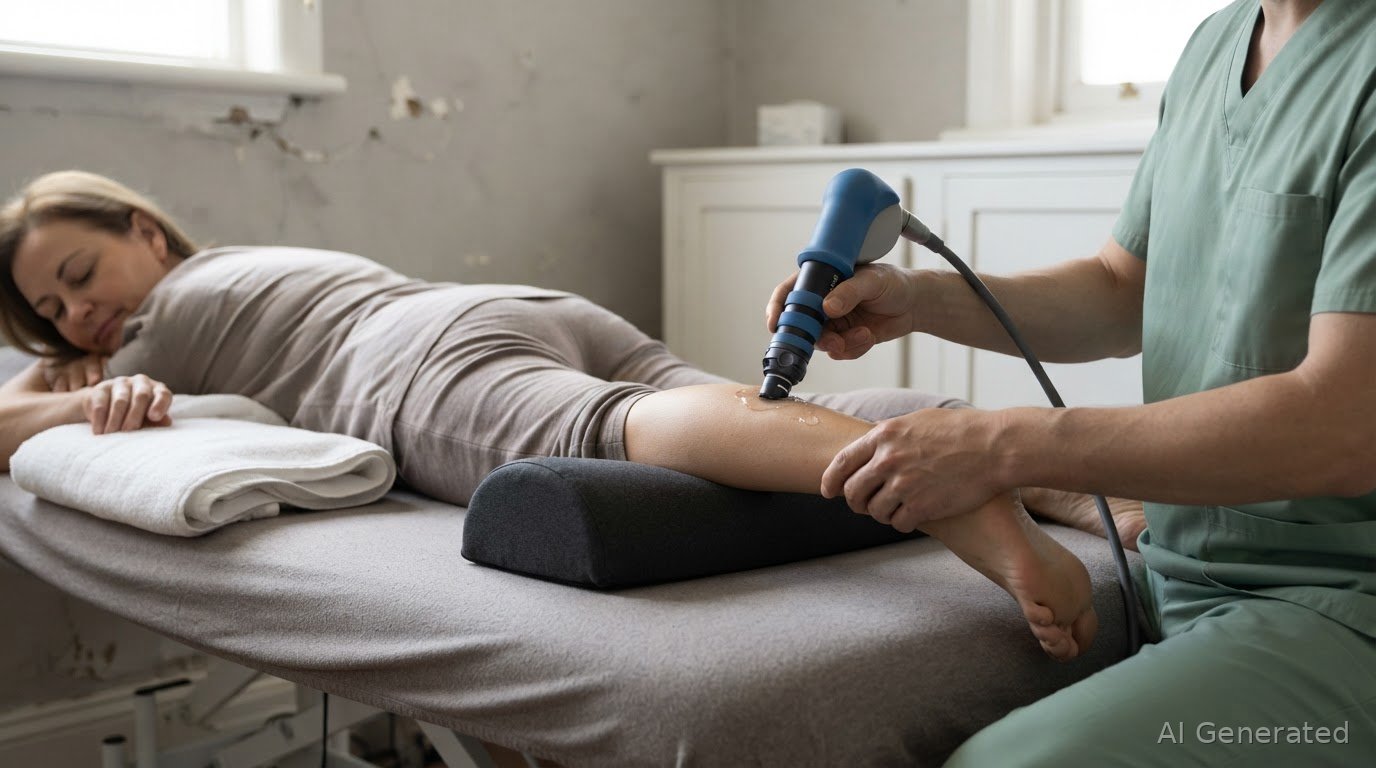
Shockwave therapy is another treatment option for long-standing sesamoiditis. A clinic describes this approach as usually involving 3 to 5 weekly sessions. It is not the same as a steroid injection: each option has a different role in managing symptoms. A podiatrist can consider symptom duration, suspected injury, pressure under the toe joint and response to previous care when discussing which approach fits.
Surgery is not usually the first step for sesamoiditis. It may be considered in rare cases when non-surgical treatment has not helped, particularly if pain persists despite several months of treatment. The decision follows assessment of the condition and response to options such as offloading. An injection does not automatically prevent surgery, and receiving one does not mean surgery will be needed.
For persistent pain, a useful next step is a podiatry review that connects the diagnosis with the treatment choice. A clinician can discuss whether inflammation, repetitive loading or a possible fracture changes the plan. Discuss tailored injection and therapy options as part of that assessment, including prolotherapy injections or shockwave therapy where appropriate.
Will orthotics help?
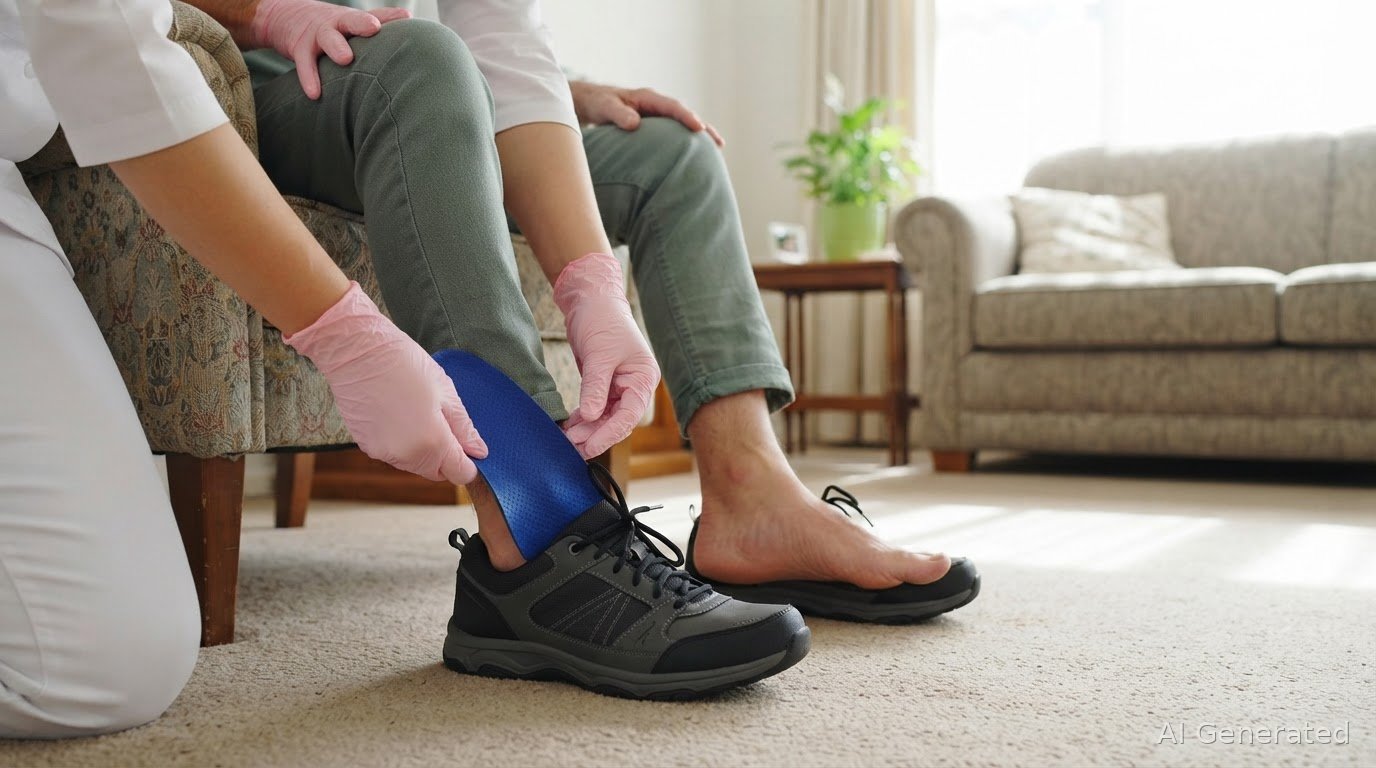
Orthotics may help sesamoiditis by reducing pressure beneath the big toe joint. A custom device can include a cut-out under the sesamoids to offload the irritated area during walking. It isn’t simply about adding cushioning: placement and fit matter, as support should reduce pressure without causing discomfort elsewhere. A podiatrist considers your symptoms, foot mechanics and daily activities when assessing whether orthotics may suit.
At an appointment, a podiatrist can review which activities increase pain and explain how to modify them while symptoms settle. This may mean reducing painful, repetitive loading and adjusting exercises that strain the forefoot. They can also guide footwear choices and monitor your response, adapting recommendations as walking becomes more comfortable. This gives you a practical plan for managing pressure during everyday activities.
For sesamoiditis, supportive shoes with cushioning and suitable forefoot padding may protect the painful area. Footwear advice is individual: the aim is to reduce pressure beneath the sesamoids while allowing comfortable movement. High heels can aggravate symptoms, and walking barefoot on hard surfaces may add pressure. Runners may need to consider replacing worn athletic shoes after 500-800 kilometres, as worn footwear can affect support.
Padding and strapping offer another way to cushion the inflamed area and ease muscle tension around it. A podiatrist can apply or recommend placement that shifts pressure away from the sesamoids, then assess comfort while you walk. Strapping and pads differ from orthotics: they can provide targeted support, while a custom device can be shaped to offload the area inside footwear.
Rest from activities that worsen pain is part of non-surgical care. A podiatrist may discuss a temporary change to exercise, with options such as swimming or cycling often less likely to aggravate symptoms than painful forefoot loading. If ice is advised, use a towel-wrapped pack for 15-20 minutes at a time, several times daily. Avoid placing ice directly on the skin.
For persistent or severe symptoms, supportive footwear alone may not provide enough offloading. A podiatrist can assess whether padding, strapping, orthotics or a removable cast best suits your symptoms. Appropriate footwear with padding may also help reduce recurrence after improvement. If walking remains painful despite adjustments, arrange an assessment rather than continuing activities that repeatedly provoke the area.
Causes and risk factors
Sesamoiditis develops when pressure around a sesamoid bone irritates the bone and surrounding soft tissues. Repeated loading can cause ongoing inflammation beneath the big toe. During normal walking, the sesamoids can absorb up to three times a person’s body weight. Running, jumping and other activities that load the forefoot add repeated force to this area.
Sudden injury can also trigger sesamoid pain. Direct trauma may damage a sesamoid, while repetitive stress can contribute to a chronic stress fracture. This fracture often causes longstanding pain beneath the big toe joint that worsens with exercise and eases with rest. A fracture is a break in the bone; sesamoiditis involves inflammation around the bones and soft tissues.
Foot mechanics can influence where pressure falls. High arches may increase pressure under the sesamoids, while the medial, or tibial, sesamoid bears most of the load and is injured most often. These features don’t prove sesamoiditis is present, but they can help explain why symptoms occur in that location.
Training changes may matter too. Ballet dancers, sprinters and basketball players commonly experience sesamoiditis because their activities repeatedly load the forefoot. Increasing running distance or exercise intensity by no more than 10% per week is the 10% rule; a faster increase may add stress before the body adapts. High-heel shoes can also aggravate symptoms by increasing pressure at the front of the foot.
Not all pain near the big toe comes from a sesamoid bone. Osteoarthritis, synovitis or gout may cause generalised swelling and pain on top of the big toe joint. Pain location and onset help distinguish these conditions from pain underneath the joint. A physical examination can assess tenderness and movement; imaging may be considered if a sesamoid stress fracture is suspected.
The cause of pain helps guide treatment. A podiatrist considers how symptoms began, which activities provoke them and whether loading has changed. If a fracture is suspected, imaging may help clarify the diagnosis before treatment progresses. An injection may be discussed for selected pain or inflammation, but it does not address repeated pressure on its own. Identifying contributing factors helps shape a plan that targets the source of sesamoid stress, not just the painful area.
Trauma or injury is described as the most common cause of sesamoiditis. Sesamoiditis is also described as an overuse injury caused by increased pressure over the sesamoid bones, resulting in chronic inflammation. A chronic sesamoid stress fracture usually develops through repetitive stress or overuse and causes longstanding pain beneath the big toe joint, aggravated by exercise and relieved by rest. Symptoms may therefore follow either an injury or ongoing pressure.
Tailored sesamoiditis treatment options
Care depends on whether assessment points to overuse, inflammation or a sesamoid stress fracture. A podiatrist considers how symptoms began, what worsens them and how walking is affected. If a fracture is suspected, imaging may help clarify the diagnosis. This distinction matters because a plan for irritated soft tissues may differ from one that protects an injured bone.
For sesamoiditis treatment in Liverpool, the first aim is often to reduce pressure on the sesamoid bones. Rest from painful activities, footwear adjustments, padding or strapping can help offload the area. A removable cast may be considered if ordinary steps continue to aggravate symptoms. A walking boot may also be used for a few weeks for a fracture or severe pain.
Custom orthotics can support the foot and reduce pressure beneath the sesamoids. A cut-out under the painful area may offload the bones, while suitable padding can cushion the forefoot. The fit needs to work with your footwear and daily activities. An assessment helps determine whether an orthotic, padding or another option best addresses your pressure pattern.
For persistent severe sesamoiditis or a stress fracture, a short-leg pneumatic walker with a rocker sole may be used for 2 to 6 weeks. The purpose is to limit loading while the affected area settles. Ice wrapped in a towel may be applied for 15-20 minutes at a time, several times daily, to help reduce inflammation. Treatment plans also avoid activities or exercises that worsen symptoms.
As symptoms improve, care may progress to range-of-motion or strengthening exercises. The right timing depends on pain and the suspected injury, so progression should suit the assessment rather than a fixed schedule. For long-standing sesamoiditis, shockwave therapy may be considered; a clinic describes treatment as usually involving 3 to 5 weekly sessions. Prolotherapy injections may also be an option in selected cases.
Most sesamoiditis is managed without surgery. Surgery is considered in rare cases when non-surgical care hasn’t helped, including pain that persists despite several months of treatment. Mild symptoms may improve within a few weeks, while more persistent cases can take longer. A tailored approach to sesamoiditis treatment in Liverpool can consider your symptoms, activity demands and recovery needs. Arrange a tailored podiatry assessment.
Prolotherapy injections and ultrasound therapy may help.
After 2 to 3 days, NHS Lanarkshire guidance says heat may be used for 10 to 15 minutes, 3 to 4 times a day.
Active Foot Care: Anti-fungal Laser Treatment
Active Foot Care’s Anti-fungal Laser Treatment is for fungal nail infections, not sesamoiditis pain. For sesamoid symptoms, the relevant next step is an assessment focused on pressure beneath the big toe and its effect on walking. Where suitable, individually manufactured and tailored orthotics may help offload the sesamoid area by changing how pressure is distributed through the foot.
If travelling to an appointment is difficult, Active Foot Care’s Podiatrist Home Visit lets you discuss foot concerns at home. The assessment can help clarify whether your symptoms fit sesamoiditis and which care options are appropriate. If you have pain beneath the big toe, contact Active Foot Care to arrange an assessment.
Choose a considered next step
Persistent pain under the big toe can make everyday movement harder, so a focused assessment is a practical next step. For sesamoiditis treatment in Liverpool, your care plan should reflect your symptoms, mobility and daily demands. Active Footcare provides Custom Orthotics when pressure management is part of care, as well as Podiatrist Home Visits for people who find attending an appointment difficult. A Diabetes Foot Assessment is available for people who need foot care that considers diabetes.
Share what movements aggravate your pain and how it affects your routine. This gives the podiatrist useful context to assess your needs and discuss suitable care. For a considered conversation about your next step, contact Active Foot Care today. With clear guidance, you can move forward with a plan suited to your feet and daily life.
Frequently Asked Questions
What are the sesamoids?
The sesamoids are small bones that sit within tendons, helping those tendons work more effectively as the big toe moves. In the foot, they sit beneath the big toe joint. The kneecap, or patella, is also a sesamoid bone and is the largest in the body. Their position means they’re involved in toe movement and bear pressure during activities such as walking.
Will I need surgery?
Surgery is rarely needed for sesamoiditis. A specialist may consider it when pain continues despite non-surgical care, such as reducing pressure on the affected area. Assessment also considers whether imaging shows a fracture or another bone problem, as this can change the treatment discussion. Persistent pain alone doesn’t determine the next step; the diagnosis and response to previous care matter too.
Can I keep running or dancing?
You may need to modify running or dancing if those activities make your symptoms worse. Repeated forefoot loading can keep the area irritated, so a podiatrist can help plan a gradual return and suggest alternatives during recovery. Swimming and cycling are low-impact options that typically don’t aggravate sesamoiditis. For running, the 10% rule suggests increasing distance or intensity by no more than 10% per week.
How long does it take to recover?
Recovery depends on symptom severity and whether a fracture is present. Mild sesamoiditis may improve within a few weeks with appropriate rest and care, while moderate to severe symptoms can take several months to resolve fully. A fracture can also take several months to heal. Changes in pain during walking and other activities help guide how quickly treatment and activity can progress.
How can a podiatrist help if my symptoms flare up?
A podiatrist can reassess what has changed, such as a recent increase in training, new swelling or pain during a particular movement. They can review your walking and toe movement, then adjust the plan to reduce aggravating load. If symptoms started suddenly after an injury or are worsening, assessment can help determine whether imaging is needed to investigate a fracture.
Will I need an operation?
An operation isn’t the usual treatment for sesamoiditis. The decision depends on the diagnosis, how long pain has persisted and whether non-surgical treatment has helped. If surgery is considered, assessment should also establish whether symptoms relate to a sesamoid fracture rather than inflammation alone. This is separate from deciding whether an injection or another treatment may help manage pain.
What is sesamoiditis and what are its symptoms?
Sesamoiditis is irritation and inflammation around the small bones beneath the big toe joint. It commonly causes a gradually developing ache under the joint, which may worsen when the toe bends upwards. Sudden pain and swelling after direct trauma can indicate an acute fracture instead. Pain on top of the big toe joint may have other causes, including osteoarthritis, synovitis or gout.
What treatments are recommended for sesamoiditis?
Treatment may combine pressure reduction with care matched to the cause of pain. Options include activity changes, supportive footwear, padding, strapping and custom orthotics. A removable cast or walking boot may be used when symptoms are severe or a fracture is present. Selected cases may involve an injection or shockwave therapy. A podiatrist uses assessment findings and your response to care to guide suitable options.

Comments