
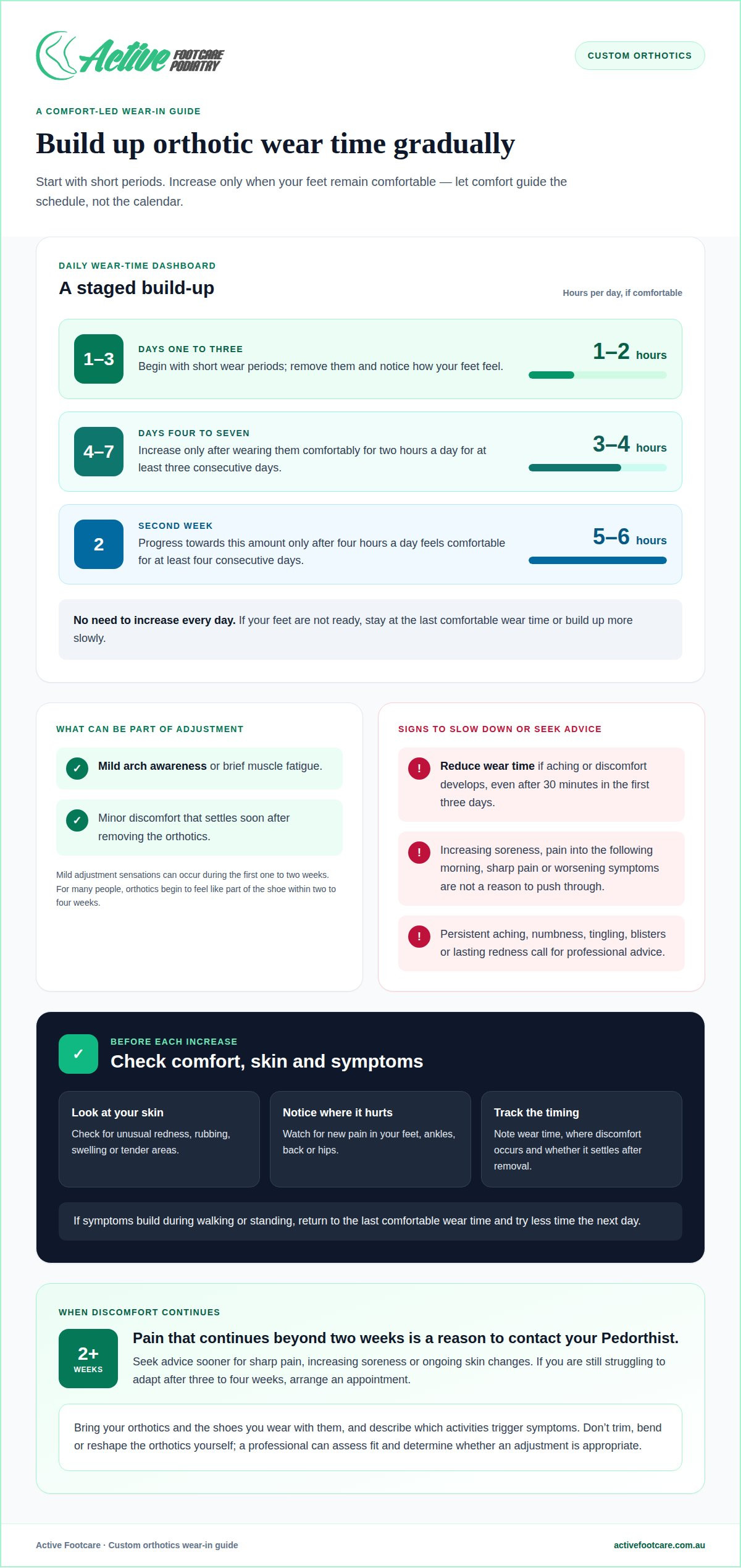
How to Break In New Orthotics Comfortably

New orthotics need time to feel familiar because they change how forces move through your feet and lower limbs. To break in new orthotics more comfortably, start with short periods of wear and increase gradually if they remain comfortable. A gradual start can help limit soreness while your body adjusts.
It’s reasonable for a new pair to feel different at first. Mild arch awareness or brief muscle fatigue can occur as you get used to the changed support, but don’t push through sharp, worsening or persistent pain.
This guide explains why orthotics have a break-in period and how to build up wear time at a manageable pace. You’ll also learn what to look for in your shoes, how to spot early signs of rubbing and when ongoing discomfort may mean your orthotics need professional attention.
Table of Contents
What are some break-in tips and tricks?
Use a staged wear-in period rather than wearing new orthotics all day straight away. Start with short periods, then increase wear time only while your feet remain comfortable.
Start with short wear periodsWear your orthotics for one to two hours on the first day, then remove them and notice how your feet feel. For the first three days, limit wear to one to two hours per day. Don’t start with a long period of standing, a full work shift or a demanding workout. Short initial use makes it easier to notice discomfort before it builds.
Gradually increase daily wear timeAfter each wear period, consider whether any soreness settles soon after you remove the orthotics. If you’re comfortable, gradually add wear time, using one to two extra hours each day as a general guide. You don’t need to increase the time every day if your feet aren’t ready. A slower pace is better than sticking to a schedule at the cost of increasing discomfort.
Reduce wear time if signs appearRemove the orthotics if aching or discomfort develops, even after 30 minutes during the first three days. If mild soreness appears, shorten the next day’s wear period and build up more slowly. Increasing soreness during the day, or pain that continues into the following morning, is a reason to reduce wear time rather than push through.
Follow a staged daily wear-time scheduleFor days one to three, aim for one to two hours per day. Before increasing wear time, make sure you’re comfortable wearing them for two hours per day for at least three consecutive days. During days four to seven, increase to three to four hours per day if comfortable. In the second week, progress towards five to six hours per day only after wearing them comfortably for four hours per day for at least four consecutive days.
Review comfort before each increaseBefore adding time, check your feet for unusual redness, rubbing, swelling or tender areas. Notice, too, whether new pain affects your feet, ankles, back or hips. If symptoms build during a longer period of walking or standing, return to the last comfortable wear time and try again the next day for less time. Let comfort guide the schedule, not the calendar.
What does it actually mean to “break-in” your new custom foot orthotics?
Breaking in orthotics means allowing your feet and lower limbs to adapt as the devices change how forces move through them. Medicare doesn’t provide a universal rebate for custom orthotics, while private health insurance may contribute depending on your policy and eligibility.
Allow time for orthotic adjustmentGive your body time to adapt rather than expecting custom orthotics to feel familiar straight away. Mild adjustment sensations can occur during the first one to two weeks, while getting comfortable wearing them for a full day can take up to a month. For many people, orthotics begin to feel like part of the shoe within two to four weeks. Don’t force a faster transition if symptoms increase.
Recognise normal adjustment sensationsNotice whether the sensation is mild and settles after you remove the orthotics. Arch awareness, brief muscle fatigue, a changed sense of ground contact and minor discomfort that resolves soon after removal can occur during early use. These sensations shouldn’t be sharp or worsening. Persistent aching, numbness, tingling, blisters or lasting redness call for professional advice.
Track symptoms and their timingWrite down where discomfort occurs, how long you wore the orthotics and whether symptoms settled after removal. For example, note if soreness appears under the arch during a short walk, or if redness remains afterwards. This information helps distinguish a temporary adjustment feeling from a pressure point or fit issue. Pain that continues beyond two weeks is a reason to contact your Pedorthist.
Arrange a fit review when discomfort persistsContact the professional who prescribed your orthotics if sharp pain, increasing soreness or skin changes continue. Custom orthotics may need adjustments to the arch contour, cushioning, posting, length or relief beneath a sensitive area. Don’t trim, bend or reshape them yourself, as changing their structure can alter their fit and function. A podiatry assessment can help identify what needs attention.
Seek advice rather than pushing throughBook an appointment if you’re still struggling to adapt after three to four weeks, or sooner if you develop blisters, numbness or persistent pain. Bring the orthotics and the shoes you wear with them, and describe which activities trigger symptoms. A podiatrist can assess how the device sits and where pressure occurs, then determine whether a fit adjustment is appropriate.
Choosing footwear for orthotics
Choose shoes with enough room for the orthotic and a secure fit around your foot. Check that the device sits flat without rocking, curling or sliding.
Choose supportive footwearChoose footwear with suitable width and depth, a firm heel counter and laces or straps. These features help hold your foot securely as you walk. A wide toe box gives your toes room, while adequate depth helps prevent the orthotic from crowding your foot. Avoid shoes with a shallow heel or tight upper that presses against the device.
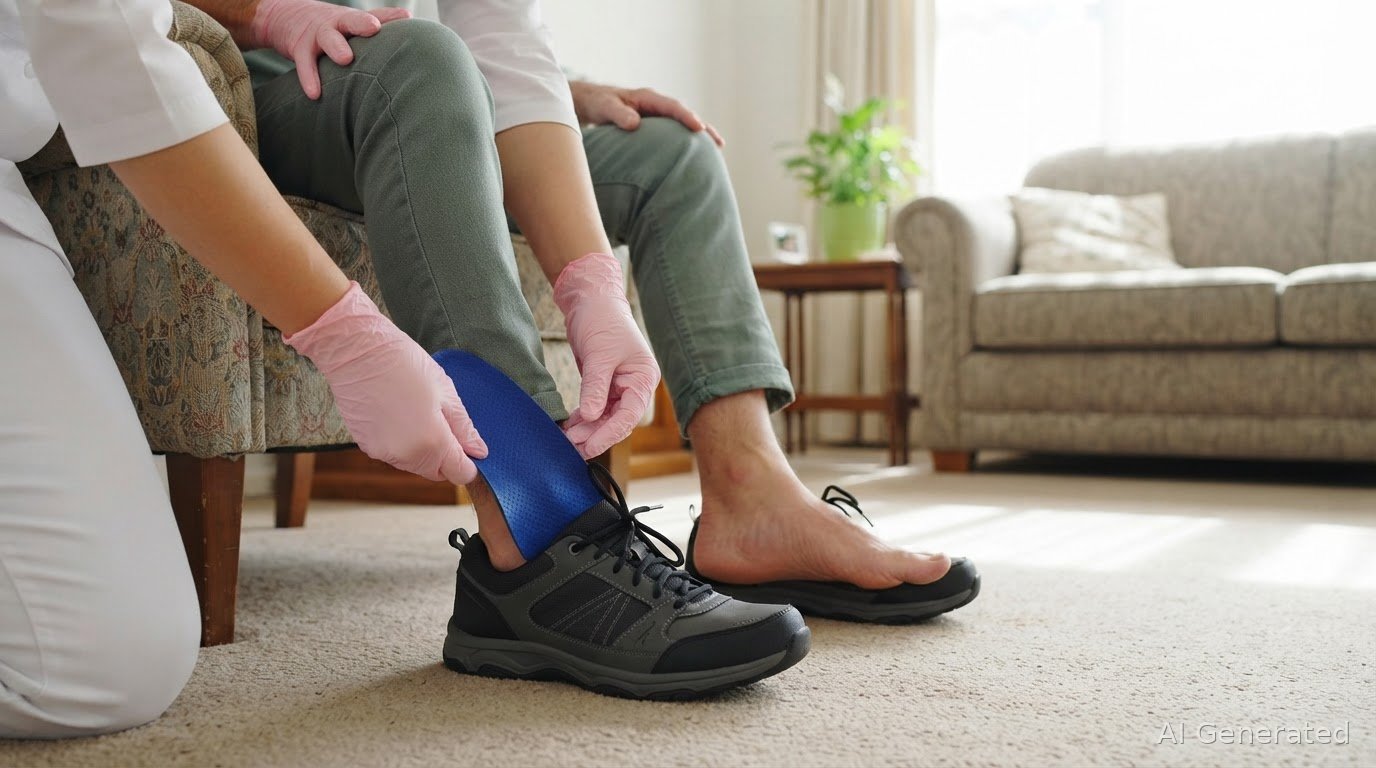
Fit orthotics into shoes and check fitPlace the orthotic in the shoe and check that it lies flat, without rocking, curling or sliding. If a removable factory liner makes the shoe feel crowded, remove it and check the fit again. Don’t force the device into a shoe that cannot accommodate it comfortably. Put on the shoe, fasten its laces or strap, then walk briefly and notice any shifting or pressure.
Consider the shoe’s wear patternWhere possible, introduce custom orthotics in new or relatively new shoes. A heavily worn shoe may have an established wear pattern that changes how the device works under your foot. For example, a heel worn down unevenly can affect how the shoe sits as you walk. The orthotic and shoe should work together, rather than placing the device in footwear that is already distorted.
Test footwear with the orthotics in placeTry shoes on with the orthotics fitted, especially when choosing running shoes. Check that your heel stays secure and your toes have room when standing and walking. Some shoes have heel openings cut too low, which can let your foot slip. If the orthotic lifts your heel or makes the shoe feel unstable, choose footwear with a more suitable shape.
Match footwear to the activityUse the shoes you expect to wear most often when assessing fit, such as work shoes for a standing shift or walking shoes for daily errands. Bring your orthotics and commonly worn shoes to an appointment so they can be assessed together. A shoe that feels roomy without the device may become tight once it’s fitted, so judge the complete combination.
When adjusting, favour deep shoes with a wider toe box and removable insoles. Try potential footwear with the orthotics fitted before buying, particularly for running.
Wearing socks to reduce friction and blisters
Wear socks or stockings with orthotics, especially during early use. Check your skin after each short wear period for rubbing or pressure.
Wear socks to reduce frictionPut on socks or stockings before fitting your orthotics, including during the first few days. Socks create a layer between your skin and the shoe, helping reduce direct friction as you walk. Choose a pair that sits smoothly, without folds or seams pressing against a sensitive area. If the sock bunches beneath your toes or heel, take off the shoe and smooth it before continuing.Keep the first wear period short, then check whether your socks have shifted or gathered. For example, after two hours, look for a red spot around the heel, arch or toes. Redness can be an early sign of rubbing, so respond before a blister forms.
Monitor pressure spots and blistersAfter removing your shoes, inspect both feet for redness, tender areas, swelling or blisters. Compare the left and right foot, and note whether a mark appears where the orthotic edge or shoe contacts your skin. A small red spot can signal friction before a blister forms. If discomfort increases while wearing the orthotics, remove them rather than continuing until the area becomes sore.Pay particular attention to any spot that remains red, feels warm or becomes more tender after you remove your shoe. People with diabetes, neuropathy, poor circulation, previous ulceration or reduced sensation shouldn’t rely on pain alone to identify a problem. In these situations, visual skin checks after each wear period are especially important.
Prevent and address blistersStop wearing the orthotics if a blister, skin irritation or extreme pain develops, and ask the prescribing podiatrist for advice. Don’t continue wearing them to see whether a blister settles. A blister or repeated rubbing may indicate a pressure area that needs assessment, particularly if the same spot is affected each time you put the device in your shoe.Seek prompt guidance if you notice an open area, drainage, persistent redness, warmth, discolouration or swelling. These signs need timely attention, not another trial with the orthotics. If you have mild soreness without skin damage, shorten your next wear period and check the area afterwards. If discomfort returns or worsens, stop wearing the device and arrange a podiatry review.
Why orthotics need a break-in period
Custom orthotics change how forces move through your feet and lower limbs. A gradual introduction gives your muscles, joints and movement patterns time to adjust.
Begin with everyday movement before trying demanding activities. Orthotics can alter how pressure is distributed as you stand and walk, so a full day of wear may feel unfamiliar at first. A short walk lets you notice how your feet respond without the added demands of a workout. Avoid testing a new pair for the first time during a long work shift, all-day outing or intense training session.
Pay attention to your muscles and joints as wear time builds. Wearing orthotics for too long too soon can contribute to muscle soreness and joint discomfort. Notice whether a new ache appears in your feet, ankles, back or hips. If symptoms build during an activity, stop and return to a shorter, comfortable period before increasing wear again. Because changes in foot mechanics can influence the rest of the kinetic chain, collaborative wellness resources like russellhealth.ca emphasise observing how your joints and spine respond alongside your feet.
Allow for mild changes in sensation, but don’t push through worsening symptoms. Arch awareness, brief muscle fatigue or a different sense of ground contact can occur as your movement adjusts. These sensations should ease after you remove the orthotics. Sharp or worsening pain, persistent aching, numbness, tingling or lasting redness needs attention, not a longer wear period.
Keep sport-specific use separate from the first stages of adjustment. Walk comfortably in the orthotics before adding demanding movement, such as running or jumping. Wait until you can wear them comfortably all day for at least a week before beginning exercise. Start with light activity, then build towards intense workouts as comfort allows. For sport, try them at a few practices before using them in a game.
Let comfort during everyday activities guide your next step. Learning how to break in new orthotics without pain starts with noticing how they feel during the activities you do regularly. If discomfort returns after you increase activity, reduce the demand and let your body settle before trying again. A practical approach to how to break in new orthotics without pain is to respond to recurring soreness rather than force further adjustment.
If custom orthotics continue to affect your movement or cause discomfort, arrange an orthotic assessment to review their fit and function.
People commonly need about 1-2 weeks to adjust to wearing orthotics. Begin with short periods of wear, then check your feet for unusual redness, rubbing, swelling or tender areas after early periods. Wearing socks or stockings with orthotics is generally advised, especially during the break-in period.
When starting to use orthotics for sports, allow extra time for gradual adjustment. If you experience discomfort during the break-in period, increase wear time more slowly or have your orthotics fine-tuned or modified by your podiatrist.
Active Foot Care: Custom Orthotics
Active Foot Care provides individually manufactured and tailored custom orthotics based on personal assessment. If discomfort persists, pressure points develop or your orthotics remain difficult to wear, a podiatry assessment can help identify whether fit or support needs attention.
Gait analysis is a non-invasive examination of the way you walk or run and can help inform orthotic care. If getting to an appointment is difficult, Active Foot Care offers podiatrist home visits. People with diabetes can also access a diabetes foot assessment and treatment.
For guidance with persistent orthotic discomfort or a fit concern, contact Active Foot Care.
Let comfort guide your next steps
Knowing how to break in new orthotics without pain means treating your body’s response as useful feedback, not a challenge to endure. As your routine changes, notice whether the orthotics remain comfortable during the activities you rely on most. A pair that feels manageable during a quiet day may feel different during longer walks or more time on your feet.
If discomfort keeps interrupting daily activities, or a particular spot repeatedly feels pressured, an assessment can help clarify whether the fit or support needs attention. You don’t need to work through persistent pain alone. A podiatrist can consider your symptoms and how you use your orthotics, then guide the next step.
Contact Active Foot Care for support if you’d like help with orthotic discomfort or fit. With appropriate guidance, you can make a considered plan for wearing your orthotics with greater confidence.
Frequently Asked Questions
Why do I need to ‘wear in’ my orthotics?
Orthotics alter how pressure is distributed as your feet move, so familiar activities can feel different at first. A gradual introduction lets you notice how your body responds during ordinary tasks, such as walking around the house or standing to prepare a meal. It also helps distinguish a brief adjustment sensation from a recurring pressure point. Treat changes in comfort as useful feedback, not a reason to force longer wear.
How long should you wear new orthotics on the first day?
Start with one to two hours on the first day, ideally during a manageable activity rather than a long shift or outing. For example, wear them for part of a short walk or while doing light tasks at home. Remove them if aching or discomfort starts, even before the planned period ends. Note where you felt discomfort and how quickly it settled, so you can choose a suitable duration next time.
What is a gradual break-in schedule for new orthotics?
For days one to three, limit wear to one to two hours daily. Before progressing, wear them comfortably for two hours a day for three consecutive days. During days four to seven, increase to three to four hours daily. In week two, build towards five to six hours only after four comfortable hours daily for four consecutive days. If symptoms increase, hold at the current duration rather than advancing automatically.
Is mild soreness normal when breaking in orthotics, and how long should it last?
Mild arch awareness or brief muscle fatigue can occur during the first one to two weeks. Discomfort should ease soon after you remove the orthotics, rather than intensifying or lingering into the next morning. If soreness remains the following morning, shorten your next wear period. Pain lasting beyond two weeks warrants review by your podiatrist, particularly if it affects walking or returns whenever you wear the device.
What pain or symptoms mean you should stop wearing orthotics?
Stop wearing them if you develop sharp or worsening pain, persistent aching, numbness, tingling, a blister or lasting skin redness. Remove the device if pressure becomes uncomfortable rather than waiting for symptoms to worsen. An open area, drainage, warmth, discolouration or swelling also needs timely attention. If you have diabetes or reduced foot sensation, inspect your skin carefully because pain may not reliably signal rubbing or injury.
How can you reduce blisters, pressure points, or arch pain from new orthotics?
Wear socks or stockings, then inspect your feet after each early wear period. A red mark beneath the arch, around the heel or near an orthotic edge can reveal friction before a blister forms. Check that the device lies flat in the shoe and doesn’t slide or curl. If the same spot repeatedly becomes tender, stop wearing the orthotics and arrange a fit assessment instead of modifying them yourself.
What should you do if orthotics still hurt after the break-in period?
Contact the prescribing podiatrist if pain persists or you’re still struggling to adjust after three to four weeks. Describe where symptoms occur, which shoes you wore and what activity brought them on. Don’t cut, bend or reshape the orthotics yourself; their contour, cushioning or pressure relief may need professional adjustment. Active Footcare provides Custom Orthotics in Liverpool, Bankstown, Moorebank, Sydney and Campbelltown, with assessment to review fit and comfort.

Comments