
How to Avoid Foot Surgery for Bunions in Liverpool

Bunion surgery isn’t always the first step. If you’re weighing how to avoid foot surgery for bunions in Liverpool, properly fitted shoes, padding, taping, shoe inserts and advice on pain relief may help ease symptoms. These measures can reduce discomfort, but they won’t straighten the toe or remove the bunion.
It’s understandable to want relief without an operation, especially when walking or moving makes the joint sore. A bunion is a change in the alignment of the bones near the big toe joint. Its severity and effect on daily life help guide treatment.
This article explains what bunions are, how footwear changes and other non-surgical options may help, and how anti-inflammatory medication may relieve symptoms. It also covers when surgery may be considered and its possible risks, so you can weigh what each option can realistically achieve.
Table of Contents
Non-surgical bunion treatment options
For people in Liverpool exploring how to avoid foot surgery for bunions, conservative care may help manage pain and pressure. These treatments can ease symptoms, but they don’t straighten the toe or remove the bunion.
Bunion pain relief
Bunion pain relief focuses on reducing rubbing and pressure around the big toe joint. Choose shoes with a wide, deep toe box, and avoid tight, pointed or high-heeled styles that squeeze the toes. A tea-towel-wrapped ice pack applied for up to 5 minutes at a time may soothe a sore area.
Padding, taping, toe spacers and toe supports can also reduce friction or help the toes sit more comfortably. Leave 3/8″ to 1/2″ of space in front of the longest toe when fitting shoes. These measures may ease symptoms, but they don’t remove the bunion or straighten the toe.
Podiatry care
A podiatrist assesses the bunion and its effect on your foot, then guides conservative treatment. The assessment considers the deformity and how your foot moves to help determine whether footwear changes, padding or an insert may suit your needs.
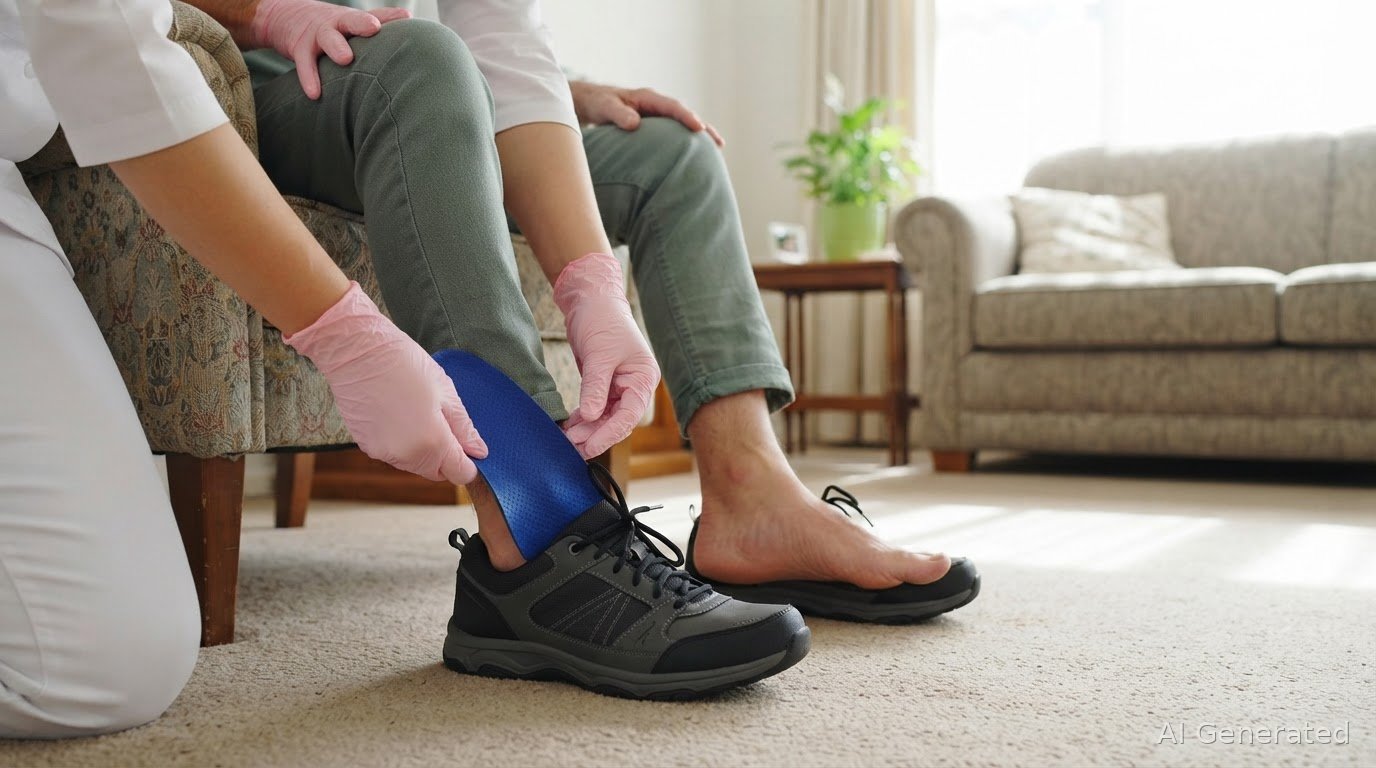
For minor bunion deformities associated with overpronation, orthotics and night splints may reduce pain and further joint degeneration. A podiatrist can also advise on insoles and toe supports, then review whether they help you walk more comfortably.
If home measures aren’t easing your pain, a GP or podiatrist can assess the bunion and discuss next steps. Seek an assessment if discomfort persists, walking becomes difficult, or the skin over the bump develops corns, calluses or breaks down. Changes in the second toe or pressure beneath the ball of the foot are also reasons to seek advice.
Anti-inflammatory medicines may be considered for pain or inflammation. The right option depends on your health and other medicines, so discuss it with a health professional. For Liverpool readers asking how to avoid foot surgery for bunions, medication may ease symptoms but can’t correct the underlying bone alignment.
Medicare and private health insurance don’t provide one universal answer for bunion treatment or orthotics. Coverage depends on the care pathway, eligibility and, for private cover, your policy. Check your applicable benefits before relying on reimbursement.
In Liverpool, NSW, a podiatrist can assess a bunion and discuss non-surgical care; access to public care depends on local pathways and eligibility. If pain continues despite conservative treatment, a surgeon may consider an operation. Possible complications include infection, recurrence, nerve damage and unresolved pain, so weigh potential symptom relief against surgical risks.
When surgery may be considered
Bunion surgery is generally considered when pain continues despite non-surgical treatment and affects walking or daily activities. The decision takes into account symptoms, joint condition, deformity and the likely demands of recovery.
Medical reasons for considering surgery
Surgery aims to correct the big toe’s position when a bunion causes persistent pain or substantial difficulty with function. A visible bump alone doesn’t determine whether an operation is appropriate; pain and its effect on everyday movement matter.
Assessment can include your medical history, a physical examination and X-rays to show the deformity and joint damage. These findings help establish whether the hallux joint is suitable for realignment or whether arthritis changes the surgical approach.
For a mild to moderate deformity, a surgeon may consider an osteotomy, which cuts and repositions bone. More severe deformity can require a different correction. If the big-toe joint has arthritis, the deformity is very severe, or a bunion has returned after earlier surgery, fusion may be considered. Fusion removes movement at that joint, so its effect on toe motion is part of the decision.
Bunion surgery can’t guarantee a straight toe or prevent future symptoms. A surgeon considers persistent pain, the joint’s condition and how the proposed operation could affect movement and function. Appearance alone doesn’t establish the medical need for an operation.
Surgical risks and recovery
Recovery is the period when bone and soft tissue heal and the foot gradually returns to activity. Understanding the practical demands helps you weigh surgery against ongoing symptoms and plan around work, transport and daily responsibilities.
Possible complications include infection, stiffness, numbness around the scar, delayed bone healing and recurrence. Swelling can take three to six months to settle, and normal shoes may not be wearable for up to six months after surgery.
After an osteotomy, recovery instructions depend on the procedure and the surgeon’s plan. Patients may be asked to rest with the foot raised for at least two weeks and wear a special post-operative shoe for about six weeks. Exercise or physical therapy may help restore strength and range of motion as healing progresses, while individuals focusing on overall wellness, weight management, and physical rehabilitation can explore relevant health resources through weightloss.net.au.
There isn’t one recovery schedule that suits every operation. The procedure, bone healing and ability to put weight through the foot shape the return to daily activities. Discussing those factors alongside the likely benefit can clarify the decision. A podiatry assessment can help review ongoing symptoms and conservative options before you consider an operative pathway.
Bunion surgery risks and complications
Hallux valgus, the medical term for a bunion deformity, can cause problems whether treated surgically or left alone. Understanding both sides helps patients weigh symptom relief against possible complications and changes to everyday movement.
Without surgery, some bunions remain trouble-free. Others may become more painful or affect walking, joint movement and shoe comfort. Long-standing deformity can contribute to stiffness, arthritis, corns, calluses or skin breakdown over the bump. In advanced cases, the second toe may retract or dislocate, creating painful pressure beneath the ball of the foot.
Surgery also carries risks. Reported complications include infection, numbness around the scar, stiffness, delayed bone healing, unresolved pain and recurrence. Superficial infection occurs in around 1% of cases, while deep infection occurs in fewer than 1 in 500. A second operation may be needed in rare cases to address a problem after the first procedure.
Recurrence is reported in up to 10% of cases, usually with a lesser deformity. Stiffness has been reported in up to 50% of patients at six weeks. Transfer metatarsalgia, pain beneath the ball of the foot, occurs in around 1 in 16 cases and tends to be temporary. These figures describe different complications, not a prediction of what will happen to an individual patient.
Other risks are less common but still relevant to a decision. Nerve pain or complex regional pain syndrome is probably less than 1 in 100; nonunion, where bone doesn’t heal together, is less than 1 in 1000. Overcorrection occurs in around 1 in 100 cases. The operation may involve a general anaesthetic, and the overall risks depend partly on the procedure and a patient’s health.
Swelling can take three to six months to settle, and some patients may not wear normal shoes for up to six months after surgery. A flat foot is linked with a higher chance of recurrence after Scarf osteotomy. These recovery effects can affect work, footwear and daily activities, even when surgery has corrected the bunion.
For a balanced decision, consider how much the bunion limits you now, alongside the possible effects of surgery and recovery. Non-surgical measures can ease symptoms but don’t correct the underlying valgus alignment. If pain persists or toe position changes, an assessment can clarify the deformity, joint condition and available options.
Bunion symptoms
A bunion is a change in the alignment of bones near the big toe joint, creating a bump on its side. The medical term is hallux valgus. The appearance can be noticeable, but symptoms and their effect on walking matter more than the bump alone.
Some bunions cause no discomfort and need no treatment. Others become painful when the big toe moves or shoes press against the joint. Pain during walking may relate to cartilage degeneration as the deformity develops. For example, discomfort may become more noticeable when pushing off through the toes or wearing shoes that rub the bump.
Look for changes around the big toe joint and nearby toes. The joint may become stiff, and the toe may angle towards the smaller toes. Corns or calluses can form where toes rub or pressure builds under the ball of the foot. Skin breakdown over the bunion bump is another change to take seriously.
Long-standing deformity can affect the second toe. It may retract or dislocate, causing painful corns and calluses beneath the ball of the foot. This altered position can make walking less comfortable and change how pressure moves across the forefoot. A change in your gait is useful information to share during an assessment.
A GP or podiatrist can assess the joint and discuss symptoms affecting daily activities. The assessment may include your medical history and a physical examination; X-rays can show the extent of deformity and joint damage. Note where pain occurs, such as at the bump, during big-toe movement or beneath the forefoot. That pattern helps explain how hallux valgus affects function.
Pain relief depends on the source of irritation. Footwear pressure may aggravate the bump, while joint changes can cause pain during movement. Symptoms may also include stiffness or painful skin changes rather than a constant ache. Persistent discomfort, trouble walking or a second toe changing position are reasons to seek an assessment rather than relying on the bunion’s appearance.
Symptoms alone don’t show whether an operation is needed. An orthopaedic surgeon considers pain, joint condition and function when assessing surgical options. For example, a Scarf osteotomy repositions the first metatarsal and uses small screws while preserving joint movement. Exercises may be recommended after surgery to restore movement, but symptom management and operative planning are separate parts of care.
Anti-inflammatory medication and injections
Anti-inflammatory medication and injections may be discussed when bunion pain or inflammation interferes with walking. Their purpose is symptom management, not correction of the toe deformity. For example, reducing inflammation around a painful joint may make daily movement more comfortable, while the bunion’s alignment remains unchanged.
Certain medicines can be prescribed to relieve bunion pain and inflammation. The right choice depends on your health, other medicines and the source of discomfort. Pain from footwear rubbing the bunion differs from pain associated with joint inflammation or arthritis. A health professional can assess these factors and advise whether medication is appropriate.
Anti-inflammatory medicine doesn’t straighten the toe or reverse hallux valgus. It may be part of a broader plan alongside roomier footwear, padding or orthotic support. For instance, easing inflammation while reducing shoe pressure addresses two contributors to discomfort, but neither step removes the bony prominence.
An injection is a separate treatment, and the type matters. Injections aren’t an osteotomy: they don’t cut or reposition bone to correct a deformity. Prolotherapy injections are available as a treatment option, but they shouldn’t be presented as a way to straighten a bunion or replace surgery when structural correction is needed.
Discuss the exact symptom being treated before considering an injection. Is the main issue local joint pain, inflammation or pressure from a shoe? A specialist can assess your foot and the affected joint, then explain how the proposed treatment relates to the problem. This helps distinguish pain relief from correction of the underlying alignment.
Medication and injection decisions also depend on health history. Mention existing medicines, allergies and conditions such as arthritis during the clinical discussion. These details help identify relevant risks and whether an anti-inflammatory approach suits your circumstances. Don’t use someone else’s prescription or change a medicine’s directions to manage bunion symptoms.
The practical takeaway is to match treatment to the cause of pain. If footwear pressure triggers symptoms, changing the shoe may address that irritation more directly than an injection. If pain and inflammation persist, a health professional can assess the joint and discuss suitable options. For guidance on whether prolotherapy injections fit your foot-pain concerns, arrange an assessment.
Active Foot Care
Active Foot Care can help you understand your bunion symptoms and explore non-surgical options before deciding what to do next. A podiatry assessment considers your foot mechanics and walking pattern. Gait analysis and custom orthotics may help address pressure or movement factors contributing to discomfort.
If getting to an appointment is difficult, a Podiatrist Home Visit offers an accessible way to discuss your foot concerns. People with diabetes can also access a Diabetes Foot Assessment as part of their foot-care needs. These services support assessment and symptom management, but don’t straighten a bunion or replace surgical advice when it’s needed.
Take the next step towards comfortable movement
Your next step is to clarify what you want treatment to help you do. For example, consider whether your priority is walking more comfortably, reducing pressure from footwear or understanding why the joint hurts. These goals provide a useful starting point for discussing care and deciding what matters most in daily life. For individuals seeking broader reading on wellness and everyday physical well-being, general health platforms such as heal-all.live can offer helpful background alongside your clinical care plan.
If you’re weighing how to avoid foot surgery for bunions in Liverpool, focus on an individual assessment rather than the toe’s appearance alone. The pattern of pain, foot function and response to conservative care all help guide the discussion. The right approach depends on your symptoms and assessment, and symptom relief doesn’t necessarily change the bunion’s alignment.
Active Foot Care can help you talk through your concerns and consider suitable podiatry care. Contact Active Foot Care to take the next step and discuss your options. With clear information and a plan suited to your needs, you can make your decision with greater confidence.
Frequently Asked Questions
What is a bunion?
A bunion is a change in the alignment of bones in the first ray, forming a bony bump beside the big toe joint. It’s also known as hallux valgus. The toe may angle towards the smaller toes as the joint shifts. Family history, ligament looseness, inflammatory arthritis, overpronation and footwear can all be associated with bunions, so the cause isn’t always just one factor.
What are the risks of surgery?
Bunion surgery can lead to complications such as infection, stiffness, numbness near the scar, delayed bone healing, ongoing pain or recurrence. Some people may need another operation to address a problem. Swelling can take months to settle, and normal footwear may remain uncomfortable for an extended period. These possibilities matter when weighing surgery alongside the pain and limitations caused by the bunion.
What are the symptoms?
A bunion may appear as a bump at the base of the big toe, but its effects vary. Some people have no discomfort; others notice pain with toe movement or walking, stiffness or rubbing from shoes. Corns, calluses and skin irritation can develop around pressure points. A changing second toe or soreness beneath the ball of the foot can also signal forefoot involvement.
What happens if I leave my bunion untreated?
Some bunions remain symptom-free and need no treatment, while others worsen and cause increasing pain or difficulty walking. The big toe joint may become stiff or arthritic, and pressure can contribute to corns, calluses or skin breakdown. With a long-standing deformity, the second toe may retract or dislocate. These changes don’t happen to everyone, but pain or altered toe position warrants assessment.
What if I have nothing done?
If your bunion doesn’t hurt or interfere with daily activities, you may choose to leave it alone and monitor changes. However, doing nothing doesn’t remove the deformity or reliably prevent progression. Notice whether pain starts during walking, the toe shifts further or the skin becomes sore. These changes can help you decide when to seek an assessment and discuss symptom management.
What non-surgical treatments can relieve bunion pain and slow progression?
Non-surgical options focus on comfort and pressure management. Roomier footwear, padding, taping and suitable shoe inserts may reduce rubbing; a wrapped ice pack can soothe a painful area for up to 5 minutes at a time. A podiatrist can assess foot mechanics and discuss orthotics or night splints, particularly for minor deformities linked with overpronation. These approaches don’t straighten the toe.
Can bunions be corrected without surgery, or only managed?
Non-surgical care can manage pain and pressure, but it doesn’t realign the bones or remove the bunion. For example, an insert may support foot mechanics while wider footwear reduces irritation. These changes can make walking more comfortable, yet the toe’s position may remain unchanged. Surgery may be considered to correct alignment when symptoms persist despite conservative care and the deformity affects function.
What shoes, toe spacers, bunion pads and orthotics help bunions?
Look for shoes with a wide, deep toe box, so the bunion and toes aren’t squeezed. During fitting, allow 3/8″ to 1/2″ in front of the longest toe. Bunion pads can cushion rubbing, while toe spacers or supports may ease pressure between toes. Orthotics are selected for foot mechanics and symptoms; a podiatrist can assess whether an insert or custom orthotics suit your needs.

Comments